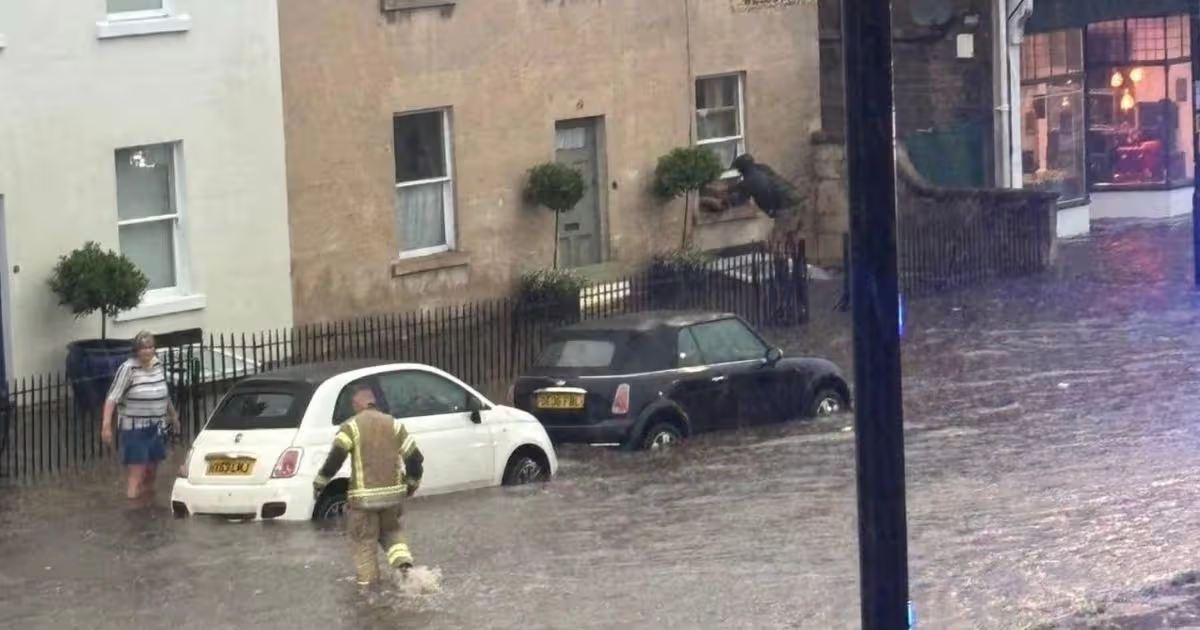
The recent heatwave and its consequences were a stark reminder that we are now, for the first time, on the front line of climate change. Across Bath and North East Somerset, temperatures reached unprecedented levels for June that affected people’s health, disrupted services and highlighted the need to build resilience and mitigation into everything we do.
At the same time, many organisations across the region have already been taking action. Local authorities, NHS organisations, universities, businesses, charities and community groups have developed ambitious climate strategies and are delivering projects that are making a real difference.
So what happens next?
We spoke to Sumita Hutchison and Ruth Barden, co-chairs of the Future Ambition Board’s Climate and Nature Group, about why the next phase is all about working together.
Many organisations already have climate plans. Why is there a need for the Climate and Nature Group?
Sumita: One of the things that really struck us during our recent Future Ambition Board workshop is just how much good work is already happening. Across Bath and North East Somerset, our anchor organisations, businesses and third sector partners have already gone a long way to addressing their own carbon footprints and to think about more sustainable ways of working.
The challenge isn’t a lack of activity. It’s that much of it happens independently. Climate change doesn’t recognise organisational boundaries, so neither can our response.
Ruth: Exactly. Rather than creating something new, we’re looking at how we connect what’s already happening. The Future Ambition Board provides the space to bring together local government, health, education, businesses, community organisations and others around a shared vision. By aligning our efforts, we can achieve much more than any organisation could on its own.
The recent heatwave brought climate change into sharp focus. Has that changed the conversation?
Ruth: I think it has. The heatwave reminded everyone that climate change isn’t something we’ll deal with in a decades’ time, it’s happening now. We saw the impacts on schools, health, infrastructure, transport and the people most vulnerable in our communities.
Climate and nature aren’t standalone environmental issues anymore. They’re economic issues, health issues and social issues. That means every sector has a role to play.
Sumita: And that’s why collaboration matters so much. Resilience isn’t something any single organisation can deliver. It comes from working collectively, sharing expertise and coordinating our response.
What came out of the recent Future Ambition Board workshop?
Sumita: There was a real sense of shared purpose. Partners committed to screening the National Emergency Briefing within their own organisations to build a common understanding of the scale and urgency of the challenge, and we will ensure that those events are made available to the whole community.
We also generated ideas for collaborative action across six core themes, recognising that different organisations bring different strengths and perspectives.
Ruth: What was particularly encouraging was the appetite to move beyond discussion and into delivery. People want to know how we can pool our knowledge, resources and influence to make a bigger impact.
What happens next?
Ruth: The Climate and Nature Group will now be working with partners across the region to strengthen those connections. That includes engaging with the West of England Combined Authority, our local MPs, the health sector, businesses, community and faith groups, and colleagues across youth and education.
Climate action has to include everyone. Social inclusion isn’t an optional extra, it’s fundamental. The communities most affected by climate change must be part of shaping the solutions.
Sumita: We’ll also be writing to local leaders to encourage bold action and collaboration, and launching a survey to better understand what’s already happening across our organisations.
The survey isn’t about starting from scratch. It’s about identifying where great work is already underway, where it could be amplified and strengthened through collective approaches, and where organisations can share resource knowledge, skills and experience to help each other go further.
What would success look like?
Sumita: Success would be Bath and North East Somerset becoming recognised as a place where organisations genuinely work together in a bold and committed way on climate and nature – not because they’re required to, but because they understand that collaboration delivers better outcomes for everyone.
Ruth: We already have the commitment, expertise and ambition. The opportunity now is to connect those strengths into a shared movement that is visible, practical and focused on delivery.
Climate change is one of the defining challenges of our time, but it’s also an opportunity to create healthier communities, a stronger local economy and a more resilient future. By working together, Bath and North East Somerset can show what is possible when a whole place comes together around a common purpose.